
Everyone talks about the technical side of IT and cybersecurity. Linux commands, networking basics, IAM policies, log analysis, ticket queues, cloud services, firewalls, endpoints, and whatever alert just fired at two in the morning. That stuff matters. You need it. Nobody gets hired to a help desk role on vibes alone.
But technical skills are not the whole job. They are the price of admission. What happens after you know the technical stuff, that is where soft skills in IT, cybersecurity, and cloud roles quietly take over and decide how far you actually go.
Technical Skills Get Attention, But Soft Skills Show How You Work
Tools get all the attention because they are easy to put on a resume. Bash, Splunk, Azure, CrowdStrike, pick your favorite acronym. It is much harder to write “explains things without making people feel stupid” as a bullet point, so most people never try.
But real work is not just running a tool. It is explaining what the tool told you. It is asking a user three follow-up questions instead of guessing. It is writing down what you did so the next person, who might be you at four on a Friday with zero memory left, does not have to start from scratch.
The tool matters. What you do around the tool matters just as much.
Real IT and Cybersecurity Work Involves People, Pressure, and Trust
Every incident has a person attached to it. Every outage has someone who cannot do their job until it gets fixed. Every password reset, every MFA lockout, every strange cloud billing spike, every alert that fires in the middle of the night, all of it eventually involves a human being who is frustrated, confused, or quietly panicking.
The technical fix matters. So does how you show up while you are doing it. Nobody remembers the exact steps you took to fix their laptop. They remember whether you made them feel like an idiot for breaking it in the first place.
Also worth noting, for the record: the printer is never actually broken because of “the printer.” It is a driver, a queue, or someone’s deep need to feel something today. Plan accordingly.
Why Soft Skills Matter in Interviews
A cybersecurity interview is not a trivia night. Nobody expects you to know everything, and if an interviewer is grilling you like it is a game show, that says more about them than it does about you.
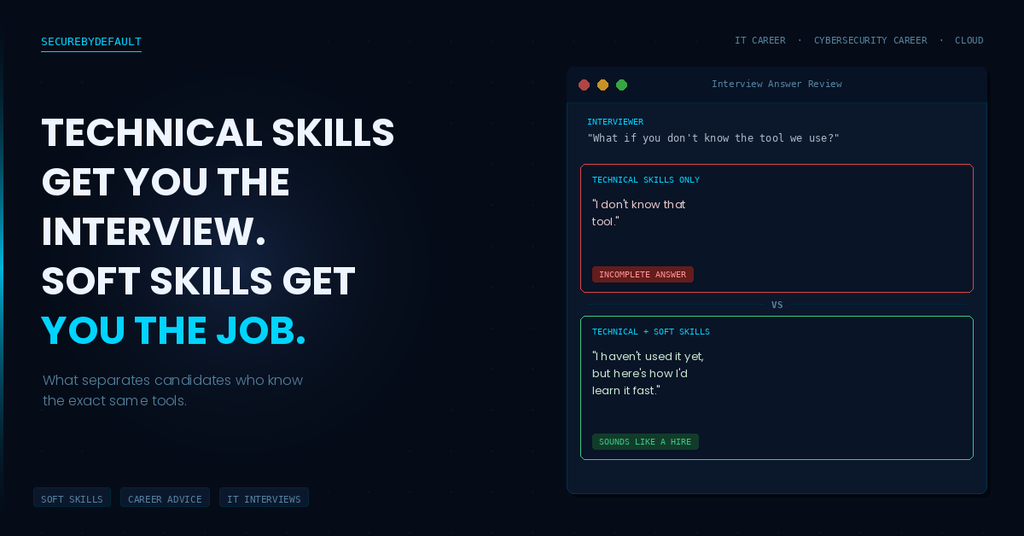
What they are actually trying to figure out is how you think. Can you troubleshoot out loud instead of freezing? Can you explain something technical in plain English to someone who is not technical? Can you say “I do not know that one” without your voice cracking? Can you describe how you would go find the answer? Can you work with a confused user without making them feel small?
That is the real test. The technical question is just the door they walked you through to get there.
The Soft Skills That Actually Matter
Clear communication
Say what happened, what you are doing about it, and what happens next, in that order. Nobody needs your full internal monologue. They need the three sentences that actually matter.
Asking better questions
“Is it plugged in” is a meme for a reason, but a good question saves you twenty minutes of guessing. Ask what changed recently. Ask when it started. Ask what they were doing right before it broke, because they almost always know and almost never volunteer it.
Calm troubleshooting
Alerts are loud. You do not have to be. The people around you take their cue from your tone, so if you sound like the building is on fire, everyone else starts looking for the exits too.
Documentation
Future you does not remember today’s clever fix. Future you is tired, has three other tickets open, and will silently thank past you for writing it down. Or curse you for not.
Curiosity
“That is weird” is a perfectly good starting point for an investigation. The people who do well in this field get a little bit interested instead of a little bit annoyed when something does not make sense.
Owning mistakes
You broke something. It happens to literally everyone who has ever touched a keyboard. Say what happened, fix it, and move on. Nobody trusts the person who blames the router.
Explaining technical topics simply
If you cannot explain what you did without stacking five acronyms in a row, you either do not understand it as well as you think, or you are showing off to the wrong audience. Neither one is a good look.
Working well with non-technical users
They are not the problem. They are the reason your job exists. Treat every question as reasonable, even the one you have answered forty times this month.
How to Show Soft Skills in an Interview
You do not need a speech. A few honest sentences do more work than most people expect.
“First, I would confirm the scope of the issue, then check recent changes, logs, and affected users.”
“I would document what I found so the next person does not have to start from zero.”
None of that requires you to know everything. It requires you to sound like someone who thinks clearly under pressure and does not panic the moment a question does not have a memorized answer sitting in your back pocket.
The Beginner-Friendly Takeaway
Technical skills still matter. Learn them. Practice them. Do not skip them because this post said soft skills matter more. They are not secretly more important, they are just underrated.
But if you are early in your IT support career, or moving from help desk into cybersecurity or a cloud career, soft skills are one of the fastest ways to stand out. Plenty of candidates know the tools. Fewer candidates can explain their thinking, stay calm under pressure, and make the person across the table feel like they would actually want to work with them.
That last part is not a soft skill nobody can measure. It is the difference between a good answer and the answer that gets remembered after five other interviews start blurring together.
Want more practical security content like this? Subscribe to The SecureByDefault Brief for one real attack, one practical fix, and one tool worth knowing, every week.