01
Mock support tickets
Five or more fully documented tickets: symptoms, questions asked, steps taken, findings, and resolution.
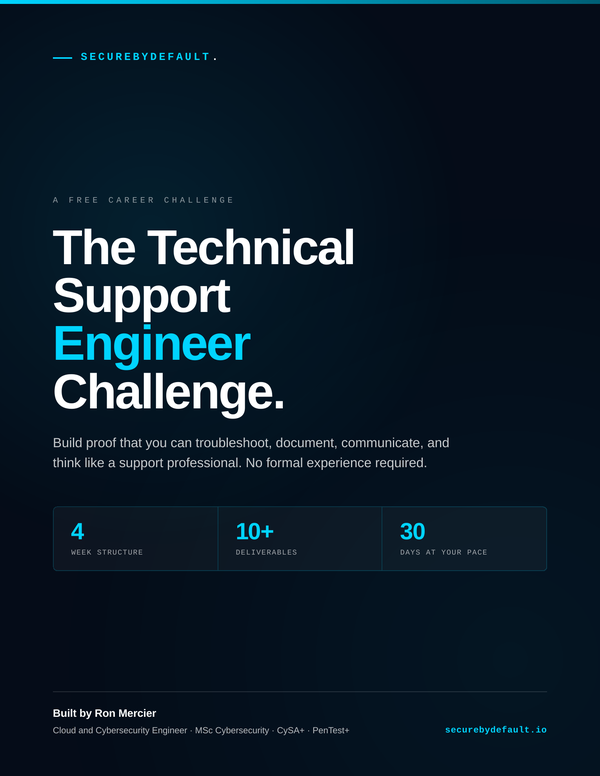
A free 4-week challenge that helps you build the exact artifacts hiring managers want to see: mock tickets, troubleshooting notes, escalation examples, resume bullets, and interview stories. No formal experience required.
Free on signup. One practical email per week. Unsubscribe anytime.
Employers want proof. But you cannot get proof without a job. And you cannot get a job without proof. Most beginners send out the same generic applications and wonder why nothing lands.
You do not need a formal help desk job to practice like one. You can build the same artifacts a working support tech produces every day: tickets, notes, checklists, escalation examples.
That is what this challenge helps you do.
By the end of the challenge, you will have concrete work to show. Not adjectives. Every item below is something you can talk about in an interview, add to a portfolio, or turn into a resume bullet that has substance behind it.
Five or more fully documented tickets: symptoms, questions asked, steps taken, findings, and resolution.
Structured diagnostic reasoning that shows how you think, not just what you know.
Clear, professional escalation notes for tickets that need a second set of eyes.
Windows and networking, security-aware support, and a "first 5 things to check" quick reference.
Before-and-after examples that turn generic claims into specific, defensible evidence of skill.
Three prepared STAR-format answers built around real challenge scenarios you completed.
Each week builds on the last. There are no deadlines and no gatekeeping. You do the work at your pace and end up with real deliverables at the end of every week.
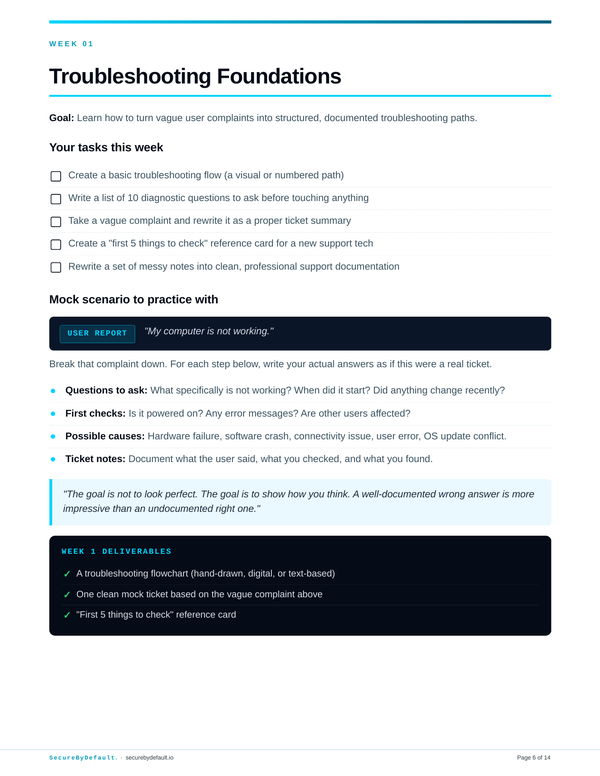
Turn vague complaints into structured troubleshooting steps. Practice writing clean support notes and asking diagnostic questions that solve problems faster.
Practice the most common ticket types: login problems, password resets, slow computers, and connectivity issues. Build a reusable checklist for each.
Learn how routine tickets can sometimes signal account compromises or phishing. Practice documenting suspicious activity and writing escalation notes.
Turn everything you built into career assets. Write resume bullets, prepare interview stories, draft a LinkedIn post, and pull together a portfolio entry.
If any of the descriptions on the right sound like you, this challenge is built for the spot you are in right now.
The Challenge is not about memorizing tools. It is about developing the four habits that separate a support tech who closes tickets from one who solves problems.
Working through realistic scenarios and documenting each step with care.
Writing tickets, notes, and escalations that the next person can actually use.
Asking the right questions, isolating variables, and knowing when to escalate.
Recognizing when a routine ticket might be an early sign of an incident.
Sign up for The SecureByDefault Brief and the Technical Support Engineer Challenge is in your welcome email. One practical lesson per week. No fluff, no job guarantees, no fear-mongering.